The Magic of Numbers: Fun Ways to Teach Place Value!
Hello, fellow educators and super curious parents! Here, we can break down all the concepts of 'Place Value' to make the topic easy to learn for kids. Making the 'place value' topic more interesting for the kids first, we have to understand that the position of the digit in a number determines its value, for example:

1. Start with the Basics: Concrete Models First!
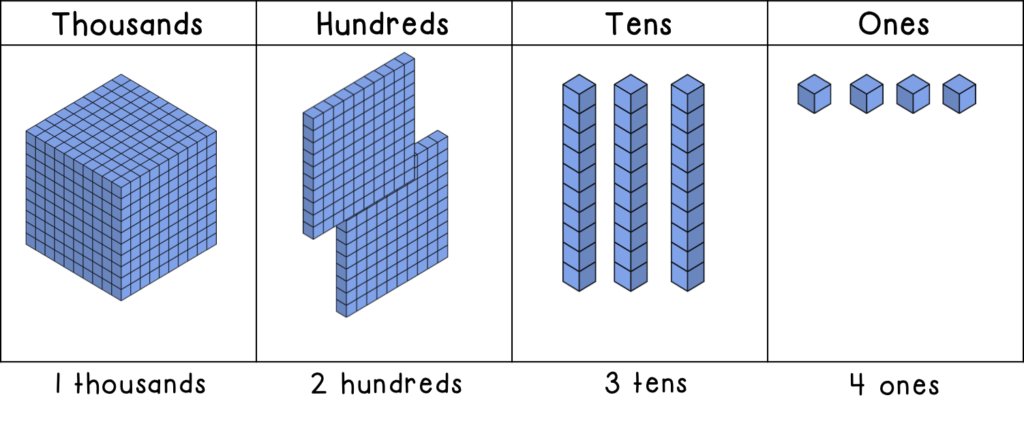
Before learning the abstract digits, children need to figure out the difference between ones, tens, hundreds, and thousands.
2. The Power of the Place Value Chart
The Place Value Chart is an organized framework that helps to understand the value of a number. The chart can be drawn with columns labeled thousands, hundreds, tens, and ones on the blackboard. Teachers can also use dry-erase markers or sticky notes.
Bonus: Introduce the comma and the thousands place early on as a grouping mechanism!
.png)
3. Get Creative! Concrete Place Value without Base Ten Blocks
Bundling Sticks or Straws: Making Groups of Ten. Simplify the activity by using loose items such as craft sticks or straws. Bundle them for grouping every time they reach 1, tie those 10 sticks together with a rubber band. The result is 3 bundles of ten and 2 loose sticks. This is the easiest way to see the difference between the '3' (which is 30) and the '2' (which is 2).
4. Exploring the Different Forms of Numbers
Imagine numbers are like a team playing a game. Each number has a special place.
The Team's Places
- The player on the far right is the Ones place. They hold single things, like 1 cookie. Their place is called the Units or Ones.
- The player next to them is in the Tens place. They don't count singles! They only count bundles of 10. If you have 2 bundles of 10, that's 20!
- The player on the left is in the Hundreds place. They count big boxes of 100 little things. If you have 5 boxes, that's 500!
5. Moving to Abstract: The Power of Zero
Once they've mastered the first three places, it's time to tackle the tricky concept of zero as a placeholder.
Scenario: Write the number 207 on the board.
Question: "Why is the zero there? If we took it out and wrote 27, would it be the same number?"
Explanation: Use the Base Ten Blocks. Build 207 (2 flats, 0 rods, 7 units). Explain that the '0' in the tens column is essential to push the '2' into the hundreds position. It shows that there are no groups of ten. The zero holds the place!
Place value is more than just a math topic; it's a way of looking at how our entire number system is structured. By incorporating these hands-on, engaging, and multi-sensory activities, you're not just teaching digits; you're building a rock-solid foundation for mathematical confidence!
Some Place Value Websites to Explore:
Discovery Education: Place Value of a Number
Mathatube: What is Place Value?
Math.com: Place Value
Brain Pop Jr: Place Value
Base Block: NLVM
Mathatube: What is Place Value?
Math.com: Place Value
Brain Pop Jr: Place Value
Base Block: NLVM
What's your favorite place value game or activity? Share it in the comments below! 👇
Comments